Jan 12, 2026

Pawel Gola
Framer & Webflow Expert
In 2026, Framer website design is redefining what’s possible online, offering tools that empower creativity and speed. This article curates the most innovative Framer website examples of the year, handpicked to inspire designers, agencies, and brands aiming for standout digital experiences. Discover how sites like Nabulé by Gola Templates and six other leaders use bold trends, smart features, and seamless interactivity to set new benchmarks. Whether you seek fresh ideas or practical insights, these selections will ignite your next framer website project and help you craft truly memorable results.
What Makes a Framer Website Stand Out in 2026?
The web design landscape is evolving at lightning speed, and a well-crafted framer website now leads the charge in innovation. In 2026, designers and brands expect more—intuitive tools, seamless collaboration, and results that impress on every device. Let’s break down what sets the new generation of framer website experiences apart and why they’re the top choice for creative professionals.
The Evolution of Framer as a No-Code Platform
Framer has rapidly transformed from a prototyping tool into a full-featured no-code platform, attracting a diverse user base of designers, agencies, and startups. In 2026, major updates like an enhanced CMS, AI-driven layouts, and real-time collaboration have positioned the framer website as a leader in digital design.
Compared to other no-code platforms such as Webflow, Wix, and Figma, Framer stands out for its intuitive interface and advanced animation capabilities. Brands like Blok and TRIFECTA are choosing Framer for its flexibility and scalability. For a deeper dive into this competitive landscape, see this Comparing Framer and Webflow platforms resource.
Adoption statistics reveal Framer’s user base has grown by over 40% year-over-year, with thousands of new sites launched monthly. This momentum showcases why a framer website is now the platform of choice for forward-thinking teams.
Design Trends Shaping Framer Websites
In 2026, a framer website is defined by its embrace of modern design trends. Minimalist layouts paired with bold typography create strong visual hierarchies. Designers are integrating immersive interactivity and micro-animations to enhance user engagement.
Mobile-first design is non-negotiable. Performance and accessibility are built in from the ground up, ensuring every framer website loads quickly and serves users of all abilities. AI-powered tools are also enabling dynamic content generation and layout suggestions, pushing creativity even further.
Minimalism with impactful typography
Interactive elements and smooth micro-animations
Mobile-first, responsive frameworks
Accessible, high-performance builds
AI-assisted design and content tools
These trends are reshaping what users expect from a framer website in every industry.
Features That Define the Best Framer Websites
A standout framer website leverages robust features to deliver exceptional results. Smart CMS integration allows for dynamic, easily updated content. Seamless animations and transitions create memorable interactions, while lightning-fast loading and SEO optimization keep users engaged.
Modular design ensures scalability as projects grow, and real-time collaboration accelerates prototyping and feedback. Templates like Nabulé by Gola Templates exemplify this approach, offering pixel-perfect design, modular sections, and animation-rich experiences without coding.
Dynamic CMS for content flexibility
Smooth animations and transitions
Fast loading speeds, SEO-ready structure
Modular, reusable components
Real-time team collaboration
Choosing these features for your framer website ensures both creativity and efficiency.
Who Benefits Most from Framer Websites?
A framer website offers unique advantages for agencies, startups, SaaS products, e-commerce brands, and creators. Its flexibility serves diverse use cases, from stunning portfolios and product launches to robust online stores and immersive digital experiences.
For agencies and startups, a framer website reduces development time and allows rapid prototyping. E-commerce brands benefit from seamless CMS integration and performance optimization. Creators and SaaS businesses appreciate the ease of use and ability to scale without technical hurdles.
By addressing common pain points—speed, adaptability, and user-friendliness—a framer website empowers teams to focus on creativity and growth.
7 Best Framer Website Designs to Inspire You in 2026
Looking for inspiration for your next framer website? The following list showcases seven standout designs, each pushing creative and technical boundaries in 2026. These examples highlight how diverse, powerful, and user-focused a framer website can be when built with the latest tools, design trends, and smart content strategies.
Let’s explore what makes each site a leader in its niche and how these framer website designs can elevate your own projects.
Nabulé by Gola Templates
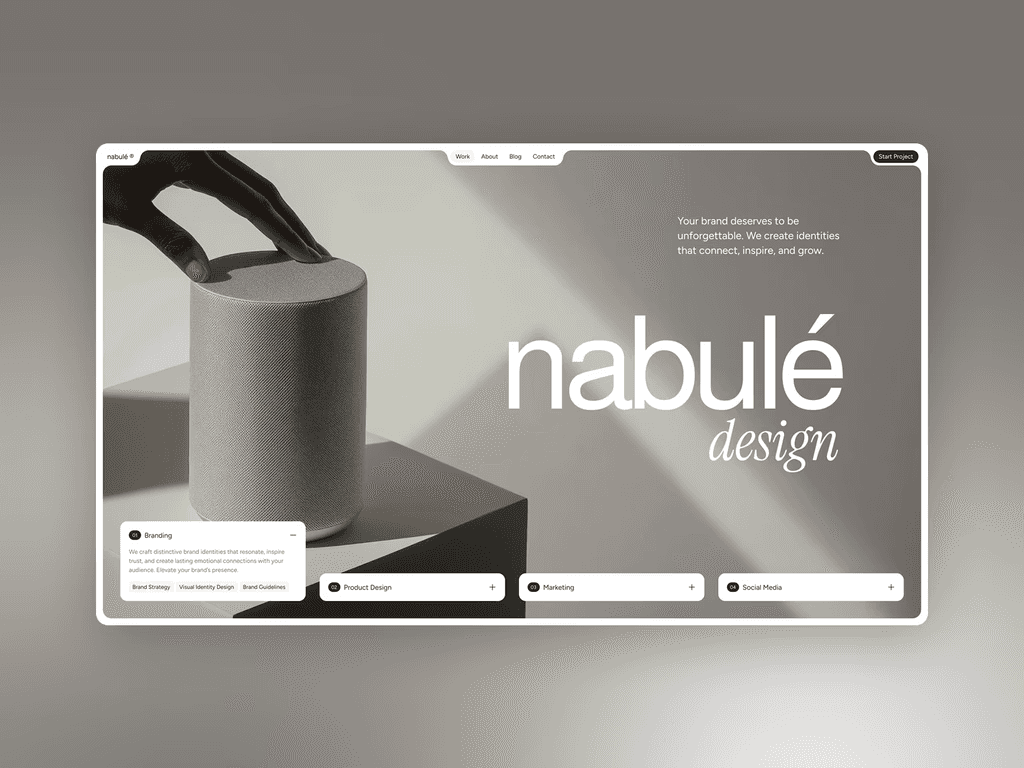
Nabulé by Gola Templates stands out as a premium framer website template engineered for modern agencies, creatives, and startups. With a one-time $79 license, users gain unlimited use, lifetime updates, and access to editable Figma files.
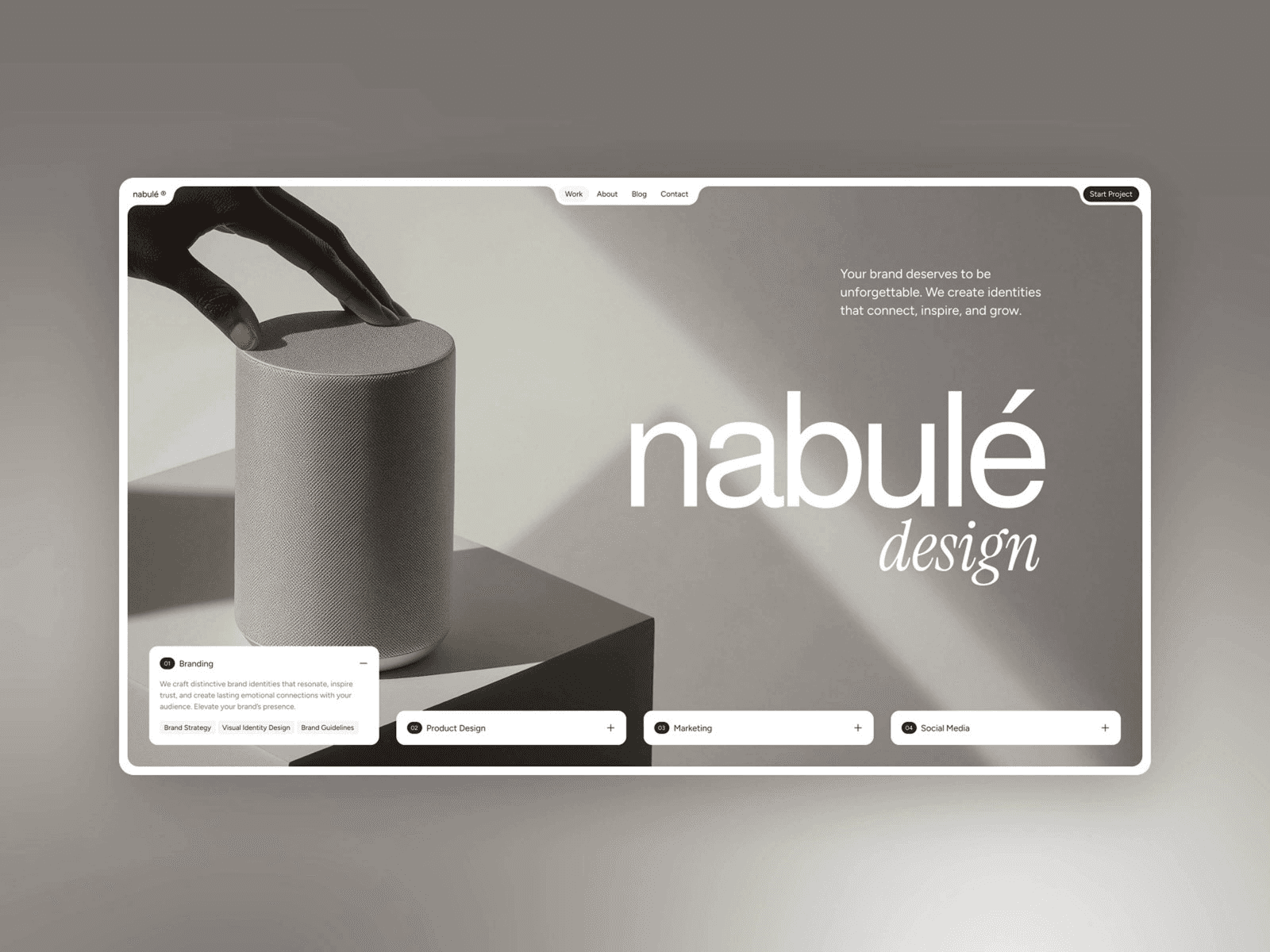
Key features include pixel-perfect layouts, a smart CMS for dynamic content, responsive design, and modular sections that simplify customization. The framer website experience is enhanced by animation-rich interactions, allowing brands to engage visitors instantly.
Nabulé’s core benefits are speed and flexibility. Launching a framer website requires zero coding, and the template’s SEO optimization ensures higher visibility. Over 17,000 creators have relied on Gola Templates for rapid site launches, making Nabulé a trusted choice for professionals seeking both efficiency and design excellence.
Ideal use cases cover everything from agency pages to creative portfolios and modern business sites. The template’s modularity and clean structure are particularly suited for scalability. While the premium price may be higher than free alternatives, the design quality, support, and included assets justify the investment.
For agencies wanting more options, explore the Best Framer templates for agencies for additional inspiration and resources.
Nabulé’s seamless integration with the framer website platform empowers teams to build, iterate, and launch with confidence.
Blok
Blok is a unique framer website designed for a hardware and app product that helps users block distractions. Its pricing is not publicly listed, following a hardware plus app model.
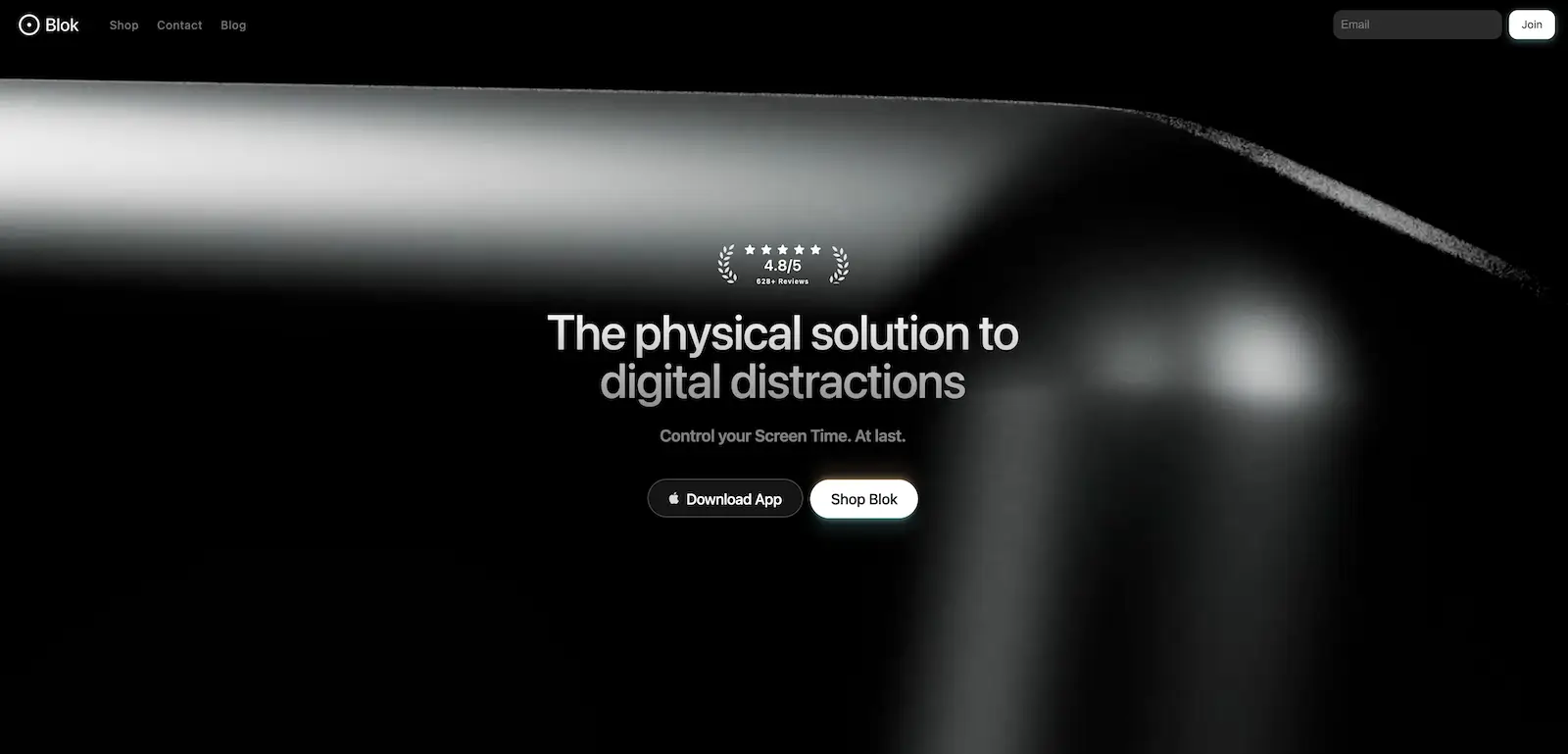
The site features a focused landing page, clear product storytelling, and an interactive explainer. By leveraging Framer’s animation capabilities, Blok demonstrates its product in action, making the framer website both informative and memorable.
The design targets productivity enthusiasts, remote workers, and tech-savvy consumers. Blok’s strengths lie in its memorable branding, engaging UX, and conversion-focused layout. The site guides users toward its call-to-action with clarity and minimal friction.
Pros include concise navigation, impactful visuals, and effective storytelling. The main drawbacks are limited navigation depth and a niche appeal that may not suit all audiences.
Blok’s framer website is ideal for hardware startups, SaaS tools, and product launches that require clear, interactive demonstrations. The site’s use of micro-animations and modular components ensures a smooth, modern browsing experience.
Blok proves how a well-crafted framer website can simplify complex concepts and drive user engagement.
Yuna
Yuna’s framer website delivers a vibrant, interactive experience for parents, children, and educators. The platform offers an app-based subscription, focusing on AI-powered personalization and educational content.
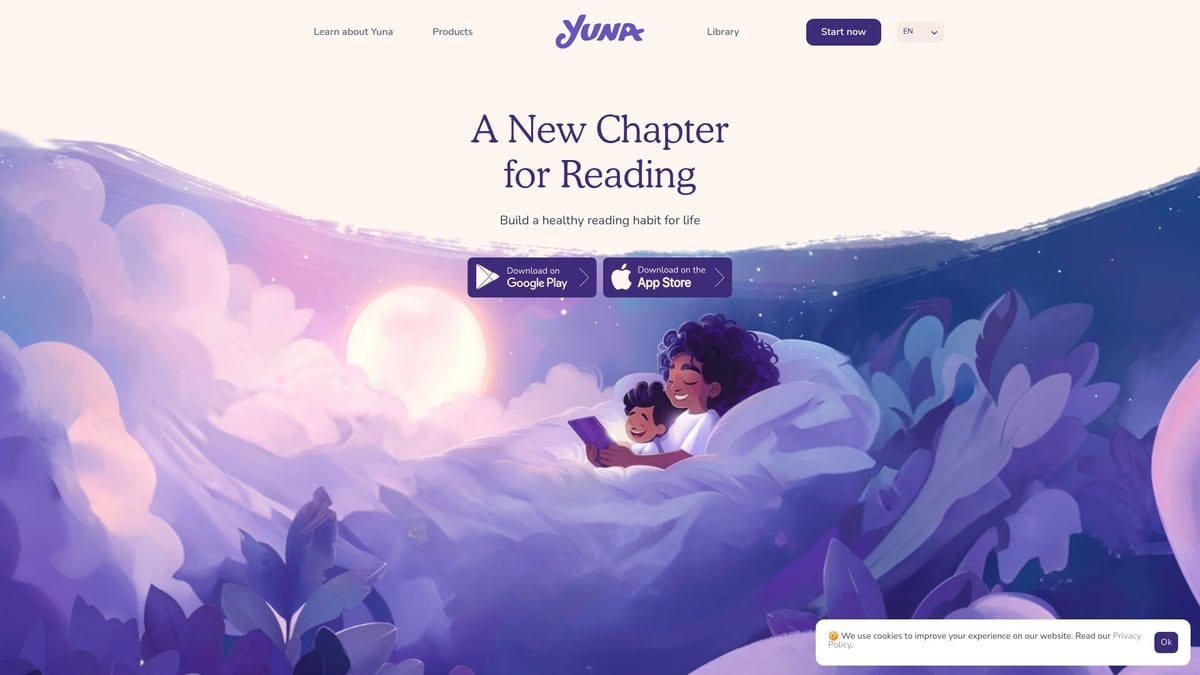
Core features include interactive stories, educational games, and multilingual support. Yuna’s family-friendly UX is driven by a playful visual style and accessible navigation. The dynamic CMS allows for frequent updates, ensuring fresh content for users.
The framer website stands out with its colorful design, intuitive structure, and accessibility features. Pros include CMS-driven content, strong localization, and a welcoming interface. However, the content-heavy nature requires regular updates to maintain engagement.
Yuna’s ideal use cases are educational platforms, SaaS for children, and content-rich applications. The site demonstrates Framer’s strengths in CMS integration and localization, making it a leading example in the educational space.
For brands seeking to create a framer website that appeals to families and educators, Yuna offers valuable lessons in user-centered design.
TRIFECTA
TRIFECTA’s framer website showcases an agency portfolio with a strong emphasis on branding, storytelling, and visual impact. Operating on an agency model with custom pricing, TRIFECTA uses Framer’s animation engine to create immersive scroll effects and animated transitions.
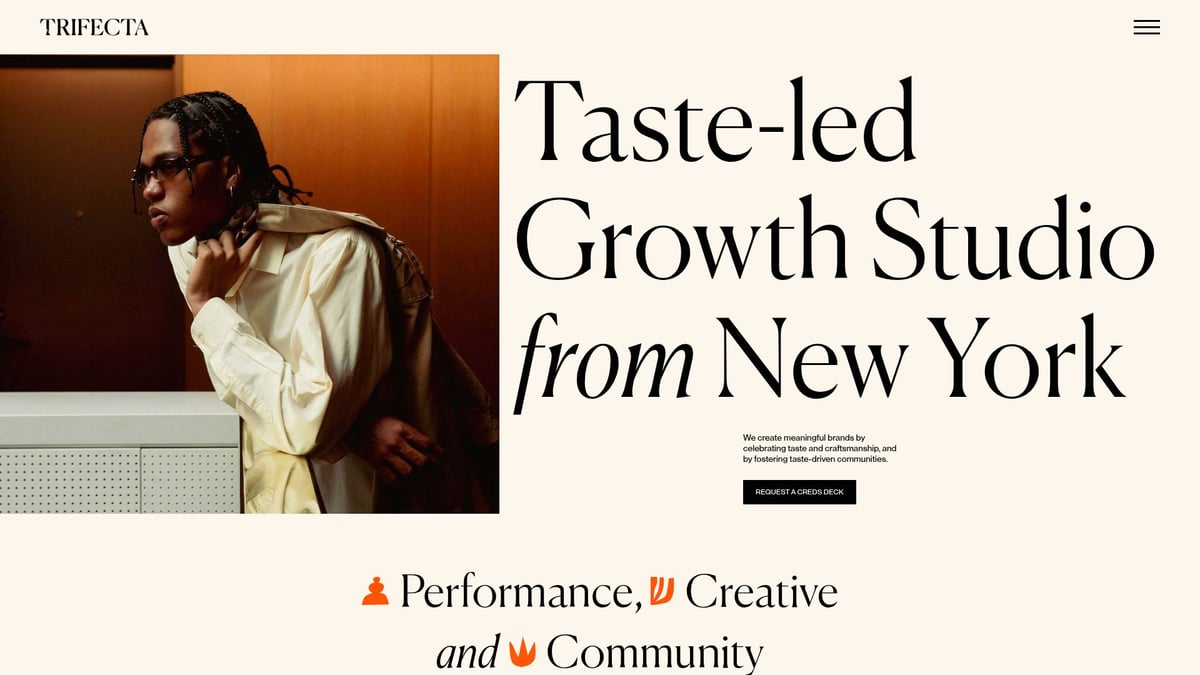
Key features include a branding showcase, detailed case studies, portfolio integration, and seamless navigation. The framer website delivers a high-impact visual narrative, making each project memorable.
Pros of the TRIFECTA site are its modern branding, immersive user experience, and smooth navigation. The main con is its heavy reliance on visuals, which may affect load speed for some users.
TRIFECTA is best suited for creative agencies, design studios, and B2B brands looking to make a strong impression. The site exemplifies how a framer website can leverage storytelling, animation, and modular design to stand out in a crowded market.
For those aiming to elevate their agency presence, TRIFECTA’s framer website underlines the power of interactive design and visual storytelling.
Wilkinson & Rivera
Wilkinson & Rivera’s framer website brings elegant minimalism to e-commerce. The site, built for a sustainable furniture brand, focuses on product-centric design, eco-friendly messaging, and easy navigation.
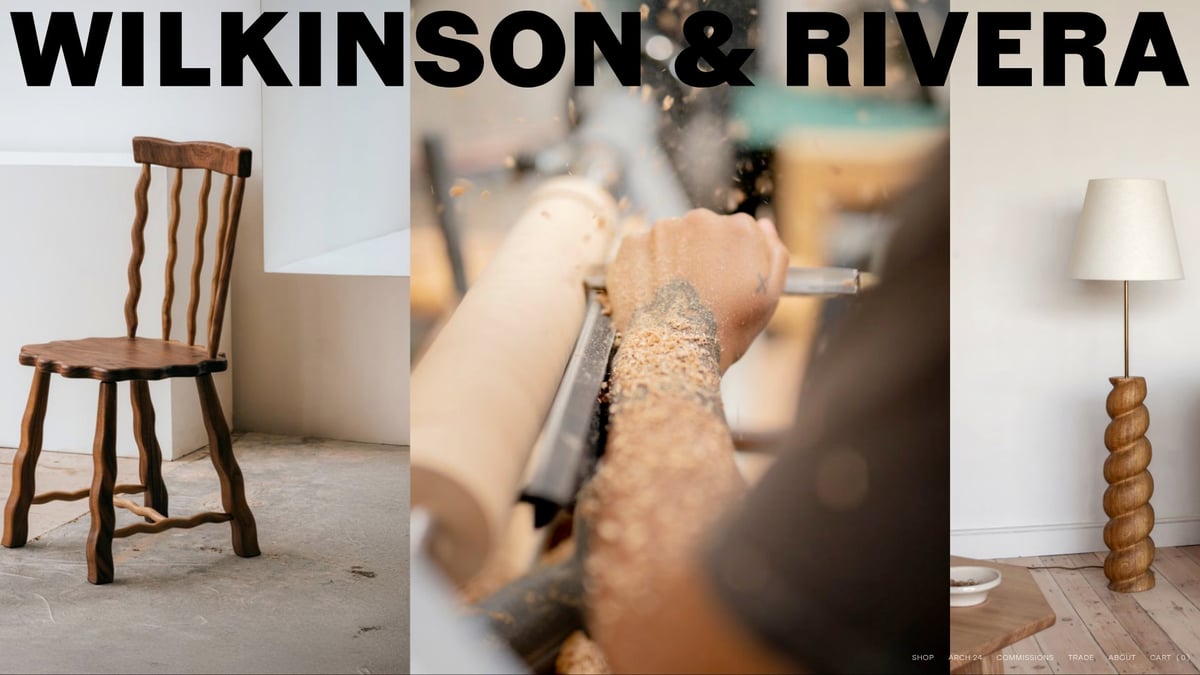
Core features include a clean product catalog, storytelling elements, and a simple CMS structure. The framer website highlights strong imagery and efficient browsing, keeping the user’s attention on the products.
Pros are the clean layout, effective product storytelling, and intuitive navigation. Cons include limited interactivity and a basic CMS compared to more dynamic sites.
Wilkinson & Rivera’s framer website is ideal for small businesses, artisan brands, and product portfolios. It demonstrates how modern and classic design principles can be balanced using Framer’s layout tools.
For e-commerce brands seeking inspiration, this framer website proves that simplicity and storytelling can drive both conversions and brand loyalty.
FEASTIE
FEASTIE’s framer website captures the energy of a food festival with its lively color palette, clear calls to action, and mobile-friendly design. The site is built around event-based ticket sales, vendor highlights, and an interactive event schedule.
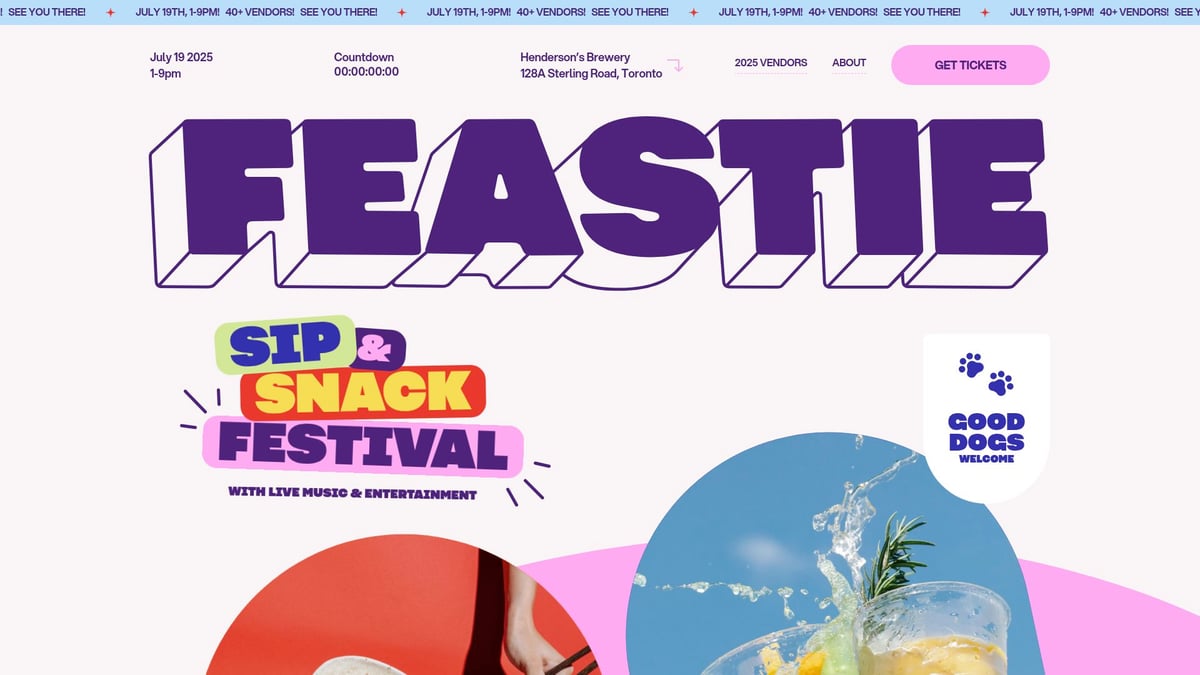
Core features include festival branding, an interactive map, and easy-to-find information for attendees. The framer website’s visuals are energetic and community-focused, making it perfect for event-goers and small business vendors.
Pros are the strong visuals, user-friendly navigation, and mobile-first approach. Cons include the seasonal nature of content and limited year-round use.
FEASTIE’s framer website is ideal for event websites, pop-up experiences, and local businesses wanting to create buzz. The design showcases how Framer’s flexibility allows for memorable, campaign-driven sites.
This framer website is a great example for anyone looking to build impactful, event-focused digital experiences.
How to Apply These Framer Website Design Insights to Your Own Project
Every standout framer website shares a foundation of thoughtful design, scalable content, and seamless interactivity. To translate these insights into your own project, focus on the core strategies that drive results in 2026.
Analyzing What Works: Key Takeaways from the Best
Begin by identifying design patterns that top framer website projects consistently utilize. Modular layouts allow for easy changes and scalability. Bold typography paired with immersive micro-animations creates a memorable first impression. Responsive, mobile-first designs ensure your site looks stunning on any device.
Storytelling is another critical element. The best framer website examples use animation and content flow to guide visitors through a narrative. Accessibility and SEO optimization are non-negotiable, making your site discoverable and usable for all.
A quick summary of what to prioritize:
Element | Why It Matters | Implementation Tip |
|---|---|---|
Modular Layouts | Easy updates and scaling | Use Framer’s component system |
Bold Typography | Visual hierarchy | Reference 2026 typography trends |
Micro-Animations | Engagement and clarity | Subtle, purposeful motion |
Accessibility & SEO | Reach and usability | Follow best practices from top examples |
By studying recent framer website launches, you can spot these recurring techniques and adapt them to your needs.
Step-by-Step Guide to Building with Framer in 2026
Start your framer website journey by choosing a proven template or designing from scratch. The Nabulé template is a versatile choice, offering pixel-perfect design, modular sections, and built-in CMS integration.
Select a Template: Pick Nabulé or another template that suits your brand and goals.
Customize Content: Edit copy, images, and color schemes to reflect your identity.
Integrate CMS: Set up dynamic content for blogs, product listings, or portfolios.
Test Responsiveness: Preview your site on multiple devices to ensure flawless display.
Optimize for SEO: Use clean URLs, meta tags, and fast-loading assets.
With Framer’s AI-driven features, you can streamline layout creation and enhance collaboration. This approach accelerates the launch of a professional framer website, saving time and reducing complexity.
Resources and Tools for Framer Designers
To build an exceptional framer website, leverage the ecosystem of templates, support, and community knowledge. Explore the Free portfolio Framer templates for inspiration or a quick start, especially if you’re focused on creative or portfolio projects.
Join Framer’s forums and tap into documentation for troubleshooting and best practices. Expand your site’s capabilities with plugins and integrations, from e-commerce modules to analytics. Stay ahead of trends by following design thought leaders and monitoring Framer’s latest releases.
By utilizing these resources, you position your framer website for long-term growth and adaptability. Continual learning and experimentation keep your projects fresh and aligned with industry standards.
Framer Website Design Trends to Watch in 2026 and Beyond
As the digital landscape rapidly evolves, framer website design trends in 2026 are setting a new standard for innovation and usability. Designers are now leveraging advanced tools and strategies to create sites that captivate, perform, and stand out in a crowded online world.
AI-Powered Design Assistants and Content Generation
Artificial intelligence is transforming the way framer website projects are built. In 2026, AI-driven tools like Framer’s AI Wireframer and Workshop are enabling designers to automate wireframing, generate layouts, and even create on-brand content in seconds. These advancements are streamlining workflows and making high-quality design more accessible than ever. For a closer look at these capabilities, explore Framer's 2026 AI-Powered Design Features. Teams can now collaborate in real time, iterate faster, and personalize user experiences with AI-generated copy and imagery.
Deeper CMS Integration and Sustainable Practices
Modern framer website builds are embracing headless CMS architectures, allowing for seamless multi-channel publishing and dynamic content updates. This approach ensures that brands can keep their digital presence fresh while maintaining scalability. Additionally, there is a growing emphasis on eco-friendly web design. Designers are optimizing assets, reducing server loads, and choosing green hosting solutions. These shifts not only benefit the environment but also improve performance and user satisfaction.
Interactive Storytelling, Immersive Micro-Sites, and Accessibility
The rise of interactive storytelling is one of the most exciting framer website trends for 2026. Designers are crafting immersive micro-sites with animation, parallax effects, and engaging narratives that foster emotional connections with users. Accessibility and inclusive design have also moved to the forefront, with more brands adopting standards that ensure everyone can enjoy their content. For a deeper dive into these creative directions, see Web Design Trends 2026: Emotion, Motion & Meaning. This commitment to inclusivity, paired with advanced interactivity, is reshaping what it means to engage online audiences.
Data, Predictions, and Framer’s Ongoing Influence
Adoption of framer website solutions is accelerating worldwide, with significant growth in emerging markets due to the platform’s flexibility and user-friendly interface. As more agencies and creators adopt Framer, expect to see even more modular, scalable designs powered by AI and dynamic CMS. Premium templates like Nabulé by Gola Templates are helping creative teams launch modern, fast, and visually stunning sites with ease. Looking forward, Framer is poised to lead the charge in web innovation, shaping the next generation of digital experiences through intelligent automation, sustainable practices, and immersive storytelling.
Share article
$249
$3601
All Access
Save with our all access bundle - get access to all premium Framer templates.
38
+
Framer Templates
51
+